You are here: F1 or Ford Mondeo? Rethinking Heat Pump Installs
Heating our homes is one of the biggest contributors to the UK’s carbon footprint, accounting for nearly a fifth of national emissions. The government has set ambitious targets of 600,000 heat pump installs per year by 2028, but the reality is sobering. In 2024, fewer than 100,000 heat pumps were fitted, compared to 1.5 million gas boilers. Even in 2025, with record growth, only around 30,000 were installed in the first half of the year. Why is this?
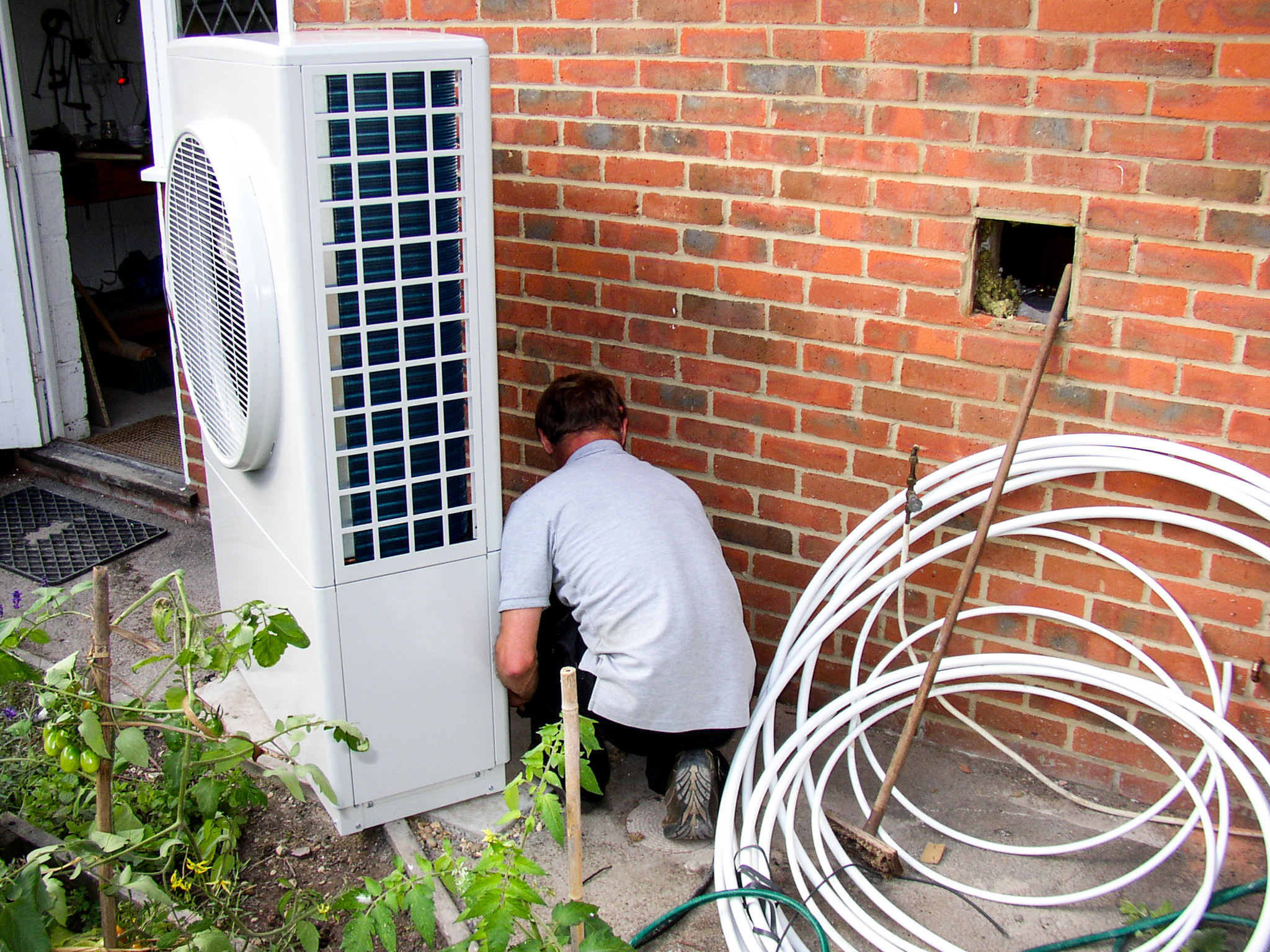
When we began looking at an air source heat pump for our own home, we quickly realised this wasn’t a simple swap from our gas boiler. The Boiler Upgrade Scheme grant of £7,500 covers the cost of the heat pump itself, but the rest, the radiators, hot water tank, pipework, extra insulation (if needed) and decorating falls to the homeowner. Suddenly, what looked like a straightforward eco‑upgrade became a major time-consuming whole house project.
Recently, with all the news about Lando Norris winning the 2025 Formula 1, we reflected on our heat pump experience. F1 drivers rely on peak performance. Every nut and bolt is finely tuned, every strategy honed and rehearsed, every team member in sync.
Installing a heat pump can feel the same!
To achieve ‘F1 performance’ at an existing property, you need a draft-free yet well-ventilated home, good insulation, perfectly sized (larger) radiators, a finely balanced system and a willingness to endure disruption and usually remedial decoration.
It seems that disruption and all these extra costs are a significant barrier to heat pump adoption. Few households are willing to spend thousands of pounds and redecorate every room for the sake of efficiency gains and cost savings that may take years to materialise. It’s not surprising that there has been a slow uptake of households upgrading from an existing heating system.
Our F1 Experience
To fully realise the benefits of a heat pump, we were advised that the whole system needed to be accurately sized, fully integrated and carefully optimised for maximum performance. Our first step was to improve our loft insulation and arrange for an Energy Performance Certificate (EPC) Assessment. To be eligible for the heat pump grant, your house must have an EPC rating of D or above.
Our attention now switched to our planned heat pump installation and achieving F1 peal performance. We have:
- Worked with two Heat Pump companies, paying for their room surveys and heat loss calculations, to specify the required size of heat pump, hot water tank and radiators. (We don’t have or want to install underfloor heating.)
- Been immersed in seasonal coefficients of performance (SCOP)*, flow rates, defrost cycles, weather compensation and warned about the potential risk of legionnaires’ disease.
- Had our home tested for airtightness and have sealed drafty skirting boards, holes behind toilets and window frames.
- Used a heat loss sensor on a Winter’s evening to see where we are losing heat from the property and have taken action to reduce this. We had already upgraded our loft insulation.
- Realised the new much larger hot water tank would completely fill the airing cupboard.
- Been advised that nearly all our radiators would need to be replaced with larger double radiators.
- Understood that installing the new radiators and hot water tank would require new pipework and connectors, and nearly every room would need some level of decorating.
Plus, we would be relying on a hopefully ‘in sync’ team of heat engineers, plumbers, electricians, builders and decorators. It’s like an F1 pit crew, every specialist has a role, and if one isn’t available, the whole process could be delayed.
A heat pump installation with F1 ‘peak performance’ would seem to entail a costly, complex process with peak disruption. Surely there must be an easier way.
The Ford Mondeo
The Ford Mondeo was never glamorous. It wasn’t the fastest car on the road, but comfortable and reliable. It was affordable, dependable and most importantly accessible. Hence, it’s popularity with families.
Maybe all that is needed for most existing homes is a ‘Mondeo’ heat pump installation. Not the absolute pinnacle of efficiency, but good enough to deliver comfort, savings and lower emissions without less disruption and extra costs.
The installation would still need to be optimised for performance and deliver both lower heating bills and reduced carbon emissions. It would be like the Ford Mondeo, a good value, reliable car with consistent performance.
Fortunately, technology improvements in heat pumps and a new AI powered approach to designing heat systems may provide just the solution we need.
Higher Temperature Heat Pumps
Traditional air source heat pumps typically supply water for heating emitters at 35-55 °C, which often requires larger radiators or expensive underfloor heating to keep rooms warm. The new high‑temperature models can reach 60-80°C, meaning they can often be retrofitted into existing homes without wholesale radiator and pipework replacement.
The benefits of these new heat pumps are:
- Compatibility with existing systems: They can work with traditional radiators and hot water tanks, avoiding the need for extensive upgrades.
- Reduced disruption: Unlike standard heat pumps, households may not need to change pipework.
- Faster adoption: By lowering the barrier of disruption and reducing the overall installation cost, they could help accelerate uptake.
- Efficiency in cold climates: Modern designs maintain performance even in freezing conditions, making them viable across the UK.
There are however efficiency considerations. High temperature heat pumps are slightly less efficient than low temperature models, because producing hotter water requires more energy.
A well-designed low temperature heat pump will provide a SCOP of 4.0+, whereas a high temperature heat pump operating at a higher flow temperature of 50+ will deliver a SCOP of 3.0+. Advice is to aim for 3.5, however, anything over 3.0 is considered good.
High temperature heat pumps can operate at a wide range of flow temperatures. If the system is run at a lower flow temperature, the SCOP will increase. This opens up the opportunity to install a heat pump and then gradually improve the home's insulation, radiators and pipework as needed, or as money allows. Great option if the gas boiler breaks and an immediate replacement is needed!
Overall, a high temperature heat pump is a certainly a more than ‘good enough’ choice for householders not wishing to rebuild their heating system from scratch.
Minimising the ‘extras’
As the heat pump industry matures, installers have been gathering and analysing real world performance data on their installations. This is providing new insights into how to design efficient heating systems.
A key finding has been that the F1 approach has resulted in over-sized installations. Building in so much contingency, the installations have cost more than necessary and involved more change and disruption than required to meet household target efficiency goals.
Heat pump installers are now designing ‘good enough’ heating systems without the need to replace all the existing radiators, add new pipework and upgrade to larger hot water tanks.
This is turn means lower costs, faster installs and minimal household disruption. Plus designing heating systems armed with real world data, means installations can be delivered with guaranteed efficiency levels.
There are no longer endless discussions around SCOPs and flow temperatures. It’s all about the heating efficiency. The recommendation is to be at least 335% (this equates to a SCOP of 3.35) to reach parity with existing gas boilers, although at least a 340% efficiency (3.4 SCOP) is recommended.
This approach is already reducing installation costs, speeding up installations and minimising upheaval for households by designing heating systems that are more than ‘good enough’ to deliver real savings and carbon reductions.
Combined with the new high temperature heat pumps this is a real game-changer in terms of costs, flexibility and ease of installation.
Closing thoughts
We will be looking at heat pumps again in the New Year. We don’t need an installation that provides F1 peak performance. We want a ‘good enough’ install that is efficient, reliable, and minimally disruptive and will deliver comfort and carbon savings without tearing our home apart.
If you are planning to install an air source heat pump, we hope sharing our experiences and research will help you determine your way forward.
*Seasonal Coefficient of Performance (SCOP): Measures a heat pump's average efficiency over a whole heating season, considering varying outdoor temperatures, giving a realistic annual performance. Formula: Total Heat Output (over season) / Total Electricity Input (over season).
Sources:
• UK Government / Climate Change Committee - https://www.theccc.org.uk
• Microgeneration Certification Scheme (MCS) - https://mcscertified.com
• Department for Energy Security and Net Zero (formerly BEIS) - https://www.gov.uk/government/organisations/department-for-energy-securi...
• Central Plumbing & Heating – ZERO DISRUPT overview - https://www.centralplumbers.co.uk/articles/zero-disrupt
• National Energy Foundation - High‑Temperature Air Source Heat Pumps: A Good or Bad Idea? - https://nef.org.uk/high-temperature-air-source-heat-pumps-a-good-or-bad-...
• Heat Pump Monitor - An open-source initiative to share and compare heat pump performance data - https://heatpumpmonitor.org/
If you are considering buying or selling a home, you may find some of these services useful:

Mortgage Brokers
I need help getting a mortgage

Energy Performance Certificate
Energy Performance Certificates

Building Surveys
I want a local surveyor to do a Building Survey for me

Home Survey and valuation
I want a local surveyor to do a homebuyer survey and valuation for me

Structural Inspections
Find an expert to carry out a structural inspection
Structural Calculations
Find an expert to provide Structural Design Calculations

Invasive weeds report
If you are concerned that you may have Japanese Knotweed, or other nuisance plants.

Electrical Reports
Find an Electrician to produce an Electrical report (sometimes known as an Electrical Installation Condition Report - or EICR) for a property.