You are here: What to look for when buying a house
Most of us are influenced, when buying a property, by things that are fairly easily changed. Carpets. Paint schemes. Nice fittings. But buying a house is not like picking a hotel: you are in it for the medium to long term. The best single thing you can do, when making a decision, is to think in terms of what can be changed, and what can’t – making sure you include, in the latter category, what can only be changed by spending a lot of money.
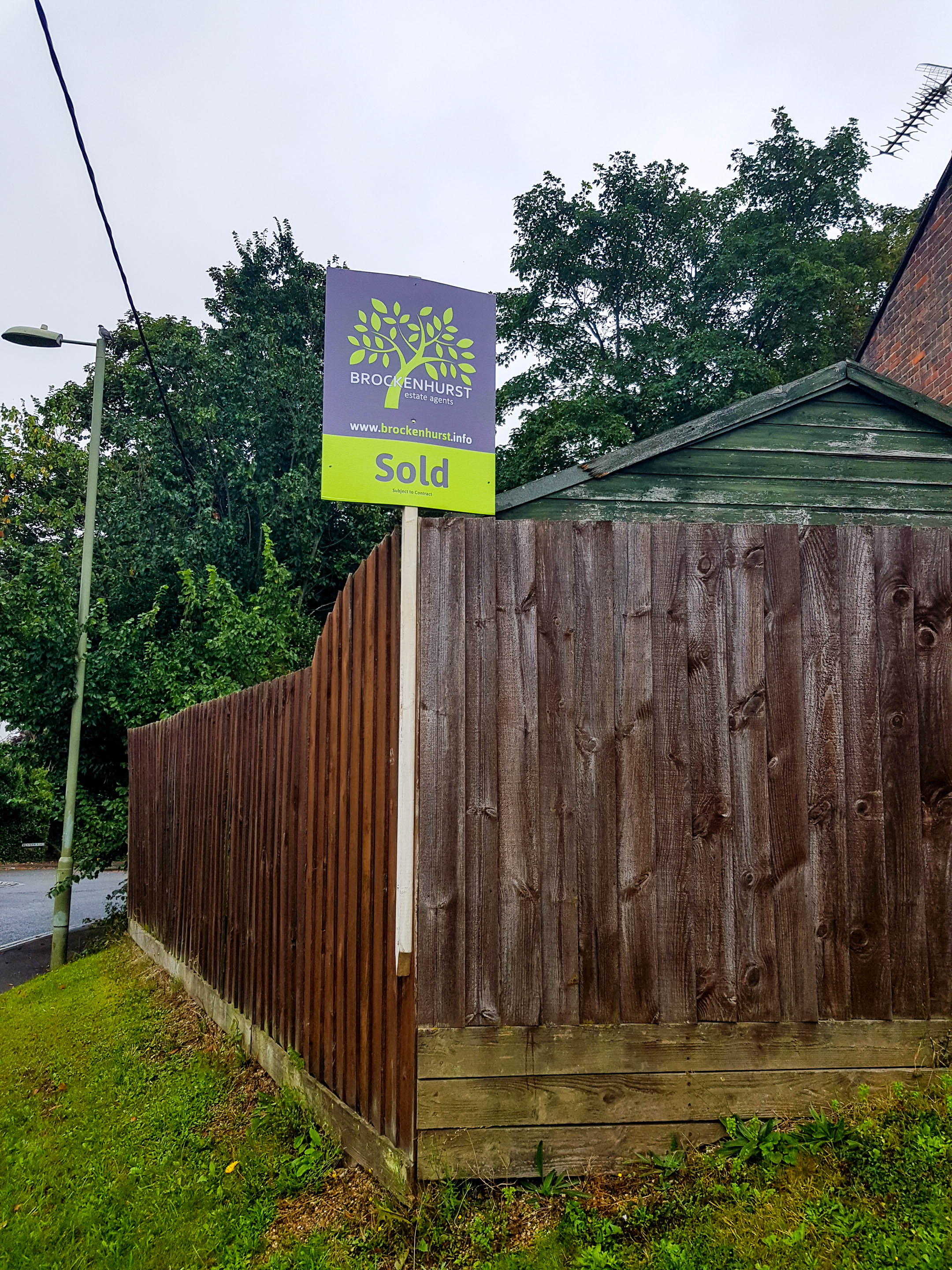
There are three aspects of any property that you really can’t change. These should be near the top of your priority list, as a result. They are: neighbourhood, orientation and plot. OK, and the size, but if you have the right plot – and enough time and money – you will be able to extend. (You could also add to that list the vendors’ commitment to selling and the length of the chain, but that is another topic altogether.)
The neighbourhood matters enormously. Estate agents emphasise ‘location’, and rightly, but they tend to view this in terms of status and amenities. Is it a ‘good area’? How far is it to a park, a railway station or a pint of milk? These are useful questions. But what creates a neighbourhood – and, surveys suggest, plays a huge part in determining how happy we will be in the home we choose – is, ultimately, the neighbours.
Not just next-door neighbours either – though if you’re sharing a boundary or party wall they are particularly important. The whole community influences how happy we feel in our homes, in the long term. A grand house may seem attractive, but houses that are widely spaced (and on wide and therefore usually busy roads) tend to have looser communities around them. So do homes with a high turnover of short-term rented properties. Urban designers have even worked out a formula that predicts how many neighbours you are likely to know. The key factors include the spacing of the houses, the amount of traffic on the road, and how long people stay. If people don’t walk, they don’t meet.
We mostly have to buy blind, in terms of the neighbours we get. (Structural surveys are one thing; commissioning a neighbour survey might be regarded as … a little intrusive.) But pay attention to clues. The state of the front or back garden is a classic ‘tell’. So are the sounds you can hear. Listen. Come back in the evening and listen again. And be brave: knock on the door, introduce yourself and say you’re interested in the house and wondered if they’d mind telling you a bit about the neighbourhood. You’ll find out a lot. If the door is closed in your face you’ll find out even more.
Orientation is perhaps second only to location in importance. If you’ve ever lived in a north-facing flat, you’ll know how it feels to have no direct sunlight in your home. And you can’t change which way your windows face. (Well, it is technically possible, if you’re buying a detached house in its own land, to raise it up on hydraulic jacks and then spin it on a specially constructed hydraulic dolly. This is frighteningly expensive, though, and tends only to be done when moving significant historic structures that otherwise cannot be saved. It’s not something you’d do so as to get a bit of morning light in the front room. Nor is it a plan that is likely to work well on the neighbours.)
Orientation is more complex than just avoiding north-facing windows. It is highly personal. Some people want sun in the back garden in the evening (‘west-facing’), imagining the sundowners and barbecues with friends. Some want sun in the morning, so the kitchen is filled with light at breakfast time. To find out what you like, think about the homes that made you happiest. To find out what you will get, arrange viewings at different times of day, and in different weathers. Ideally.
So much for what you can’t change. (Though if you’re buying a listed building, the list is much longer – depending in part on the outlook of your local listed buildings officer; the system is complex, and how it is applied varies hugely.) As for what can be changed, but at a price, it starts with anything that is structural. The roof – is it collapsing? The foundations – are they subsiding? The walls – are they running with damp? A Homebuyer Report, Structural Survey or a specific report from a structural engineer will identify major problems. And you really want to know about them in advance. Structural issues cost structural money to fix – and if you don’t have that money, you’ll need to negotiate a discount on the agreed offer.
Before you get to surveys, though, you can get a good initial sense of a house by thinking like a structural surveyor. (You could even make a separate visit, to keep your mind focused.) Concentrate on doors and windows, the foundations and the roof. Look under and behind things. Get into the loft and the basement if you can. Check the garden for everything from flooding and pests to Japanese knotweed. Are there any odd angles or bulges in the walls? Is everything safe and secure? Touch everything. Open every door. Turn lights on and off. Test the taps, shower and flush – and, if they’ll let you, the heating. Feel and smell for damp.
Think like a property speculator too. In the longer-term, what could be extended? How could rooms be reconfigured to maximise the house’s potential? Don’t set too much store on grand schemes, though. Unless you have enough money to redevelop from the start, you are likely to be living with the house as it is for some time.
That last tip – feeling and smelling – is often neglected. It’s easy, in an age in which we can all endlessly share beautiful property photos, to forget about the other senses. But buying a house isn’t just a matter of knowing what to look for. Is the property near, say, a restaurant with a noisy, smell kitchen extractor? Does it back onto a venue where lorries reverse, or a pub garden where smokers congregate? Is it under a flight path or over a Tube line? (And, to return to vision, is it overlooked by streetlights that you didn’t notice because you only visited in the daytime?) It is noisy outside, or within? We are too unassertively British when we do viewings; try talking loudly. That way you’ll really find out if the walls are thin.
It’s easy to forget more recent developments in housing, too. Is the house well-insulated? Does it get good Wi-Fi, and is there fibre broadband? Does it have solar panels or a ground- or air-source heat pump, and do they need maintenance? What will it cost to heat? Since 2007 sellers (except sellers of listed buildings) have had to provide an Energy Performance Certificate (in England and Wales, or a Home Report in Scotland) but these need to be treated carefully as the assessors can only verify what they can see. Still, they’re a fair guide and anyone buying to let will want to be cautious about the lowest-ranked properties rated F and G, as those have to be upgraded before they can be offered to prospective tenants.
And don’t overlook tech tools either. Touching and smelling are useful. So are websites and search and mapping tools that will give you everything from local crime figures to air and noise pollution levels, from traffic flow patterns to mobile signal strength and broadband speeds – not to mention nearby planning applications. (It can be crucial to know about these, and your solicitor’s searches will not necessarily pick them up – and not in time for you to make decisions.) If you’re thinking about the longer-term, think about not just historic flooding (picked up in the solicitor’s searches) but future vulnerability. Sea levels are expected to rise 30cm by 2050 – and that is very much an average. Some areas will be far more exposed to tidal surges and the like. Will your property be affected by climate change?
Of course, choosing a house is ultimately like choosing a partner. If you fall in love, you’ll live with any number of faults. But you don’t take out a mortgage on a partner. When you’re buying a house, it’s different: it’s a business decision as well as an emotional one. As a result, it’s well worth thinking like a professional, and challenging your gut instincts.
If you are considering buying or selling a home, you may find some of these services useful:

Mortgage Brokers
I need help getting a mortgage

Energy Performance Certificate
Energy Performance Certificates

Building Surveys
I want a local surveyor to do a Building Survey for me

Home Survey and valuation
I want a local surveyor to do a homebuyer survey and valuation for me
Structural Inspections
Find an expert to carry out a structural inspection
Structural Calculations
Find an expert to provide Structural Design Calculations

Invasive weeds report
If you are concerned that you may have Japanese Knotweed, or other nuisance plants.

Electrical Reports
Find an Electrician to produce an Electrical report (sometimes known as an Electrical Installation Condition Report - or EICR) for a property.