You are here: Permeation Engineering
This paper was originally presented at a CPD Conferences Course in November 2023. A recording of this talk can also be found on the CPD Conferences Website.
From the moment a building or structure is finished it starts to fall apart. Through its life history it is likely to develop defects be affected by wear and tear, be subject to subsidence, need to be altered and possibly upgraded to meet modern standards.
At every stage Stress as a specialist, finds itself providing assistance to owners, engineers, surveyors and developers overcome sometimes difficult and complex construction problems.
Over the past 30 years we have developed and expanded our specialist skills so that we now provide a range of geotechnical solutions for remedial foundation and retaining wall problems to strengthening and repairing all types structure from domestic dwellings, commercial building to heritage monuments and bridges. We provide all main insurers and lost adjusting practices with a turn-key service for subsidence and listed building works.
What we are going to concentre on today however is geotechnics - the dark art of ground engineering to design safe supports for our buildings, structures, excavations and slopes. There are of course many aspects of geotechnical engineering, but our time today is limited so we are therefore going to cone it down considerably to talk about a relatively new technique of stabilising and strengthening the ground by forming a composite material directly in situ without the need for excavations or concrete. We call it PERMEATION ENGINEERING.
This of course sounds too good to be true, so today my aim is to de-mystify polymer ground injection. We’ll look at the theory behind the technique, including the behaviour of fluids under pressure, we’ll define and demonstrate the important principle of permeation, what works and what doesn’t. We’ll go into detail on how and why we have developed this unique technique, what it can do, where we can use it and why it can be relied on as an engineering tool to solve suitable geotechnical problems.
- We’ll look at the logistics, the benefits and advantages of this technique, and show you a wide range of examples of where it has been used.
- We’ll look at the property differences of grouts, why do we use certain types.
- We’ll look at different types of grout flow through soil.
- We’ll discuss what soil types are suitable and what soil types are not.
- We’ll look at why it is essential to use a specific technique of grout placement.
- We’ll talk about the properties of the composite material created and how this gives us the necessary support for foundations and a range of other uses.
- We’ll want you to think about and hopefully understand these fundamental principles and ask questions if you don’t.
Imagine if you could underpin a building to 4 or 5 metres below ground level without digging large deep holes in the ground or using a piling rig.
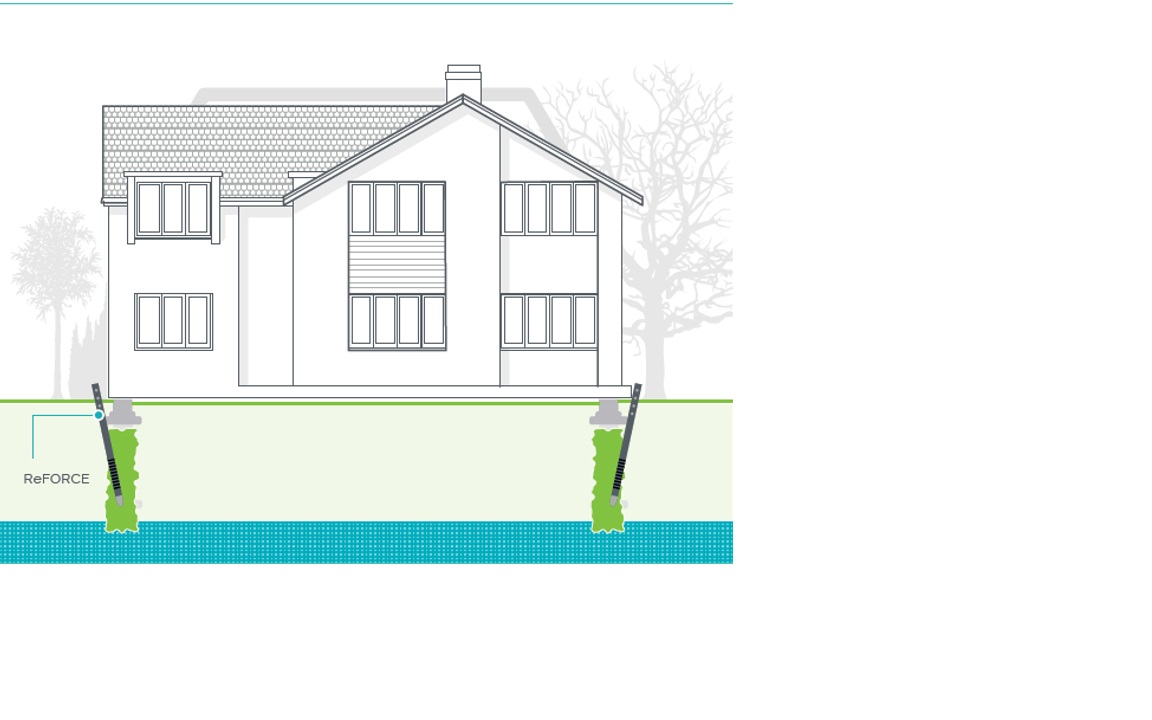
Think of the health and safety advantages for our labour force. Contemplate the enormous carbon savings by not having to excavate soil out and transport to land fill, and then import large volumes of concrete to place back in the whole. Think about the lack of disturbance to the building owner, the reduce contract period, the potential cost savings.
Imagine if you could pre-treat the ground so that when a basement is constructed the temporary works can be simplified, the sequence accelerated, the programme shortened, and the risk of collateral settlement avoided.
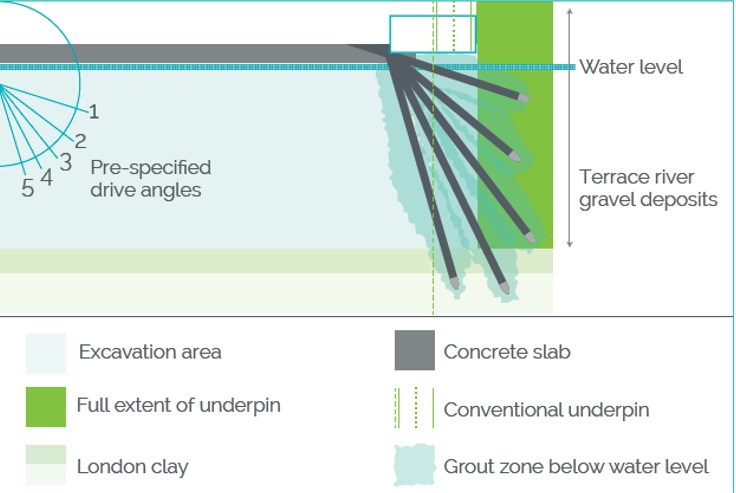
What if excavations could take place without the need for de watering?
How pleased do you think a client would be if you could inject the fill over a brick arched bridge to reduce deflections without stopping road traffic or trains?
You may have come across clients with retaining wall problems. The walls are failing but the access is so tight it would not be possible to use a machine capable of driving in ground anchors. ReFORCE anchors can be installed through 40mm holes with hand-held drivers.
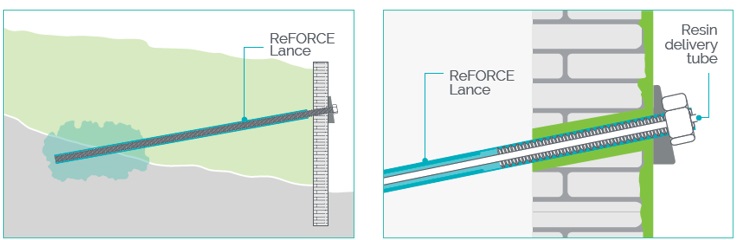
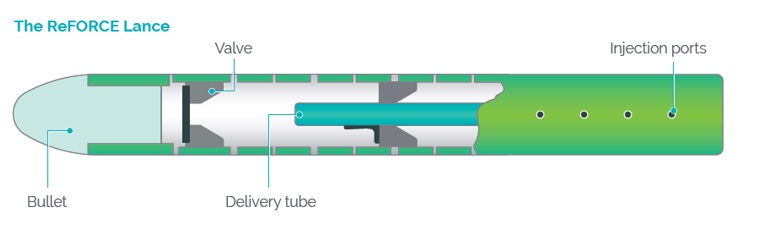
These are all current uses of the unique patented ReFORCE system which has now been in operation successfully for over 18 years.
More about the Stress Group:
Stress UK or ‘Structural Repairs and Specialist Services Ltd’, to give its full title, was brought into existence in 1992 to try and provide a combination of specialist contractor and consultant. This meant we could design and install remedial foundation and structural repair solution schemes for our clients. Coming from the world of the consulting engineer before being lured over to the dark side (contracting), I found the practical aspect of engineering far more satisfying than the theoretical number crunching, and the solving practical problems so satisfying. Before long we were searching out innovative techniques for repair and strengthening and starting using masonry reinforcement to repair and enhance brick and stonework and carbon fibre plate bonding for reinforced concrete structures. Our love of rejuvenating historic buildings, bridges and monuments lead us to take on a qualified building conservator and we have been providing a heritage service to clients such as the National Trust, listed building owners and Insurers providing them with a full package from design and access statements, listed building applications, schedules of work, together with the required site techniques for considered and sympathetic repair and refurbishment.
GeoInnovations Limited was brought into the world by my colleague Simon Collis and I approximately 20 years ago to carry out R & D projects to find more effective methods of improving the ground. We invented and patented the ReFORCE and Geo4ORCE systems which Stress has been installing successfully for the past 18 years.
In 2012 we took over a bridge strengthening and refurbishment company that specialised in masonry arch structures. Certain managerial aspects of the company did not align with the Stress philosophy however but within a fairly short period and some training and nurturing Goldhawk became a very interesting, busy and profitable addition to the group.
Within these last 11 years Goldhawk has strengthened and rehabilitated masonry arches all over the UK. From vaults beneath the streets of London to National Highway and Network Rail bridges, these valuable heritage structures have been repaired and strengthened using our unique MARS system to bring them up to the latest highway loading standards, reduce future maintenance and extend their life. The carbon saving by not replacing bridge crossings is enormous and we help to maintain the stock of our cherished arched structures.
Following analysis of the bridge by our in-house engineers we design a strengthening system which uses stainless steel masonry reinforcement bonded into the underside of the arch. The MARS system as it is known is unique and has been successfully installed in hundreds of masonry bridges and arches all over the UK. Our highly trained technicians under effective management can work on a bridge, install the MARS system without the need to stop traffic using the crossing. This saves huge amounts of disruption to road users, expensive re-routing of buses and lorries, temporary uplifting and diversion of utilities which are often buried in the road and can be carried out in short contract periods. The result is a very cost effective and low carbon footprint method of extending the lives of our ageing and often historic and loved bridges.
Paper written by David N Kitching MSc CEng MICE DIC FGS
Email address : david.kitching@stressuk.com dnk@goldhawkbr.co.uk