You are here: Shower Panels: a low maintenance, cost-effective alternative to tiling
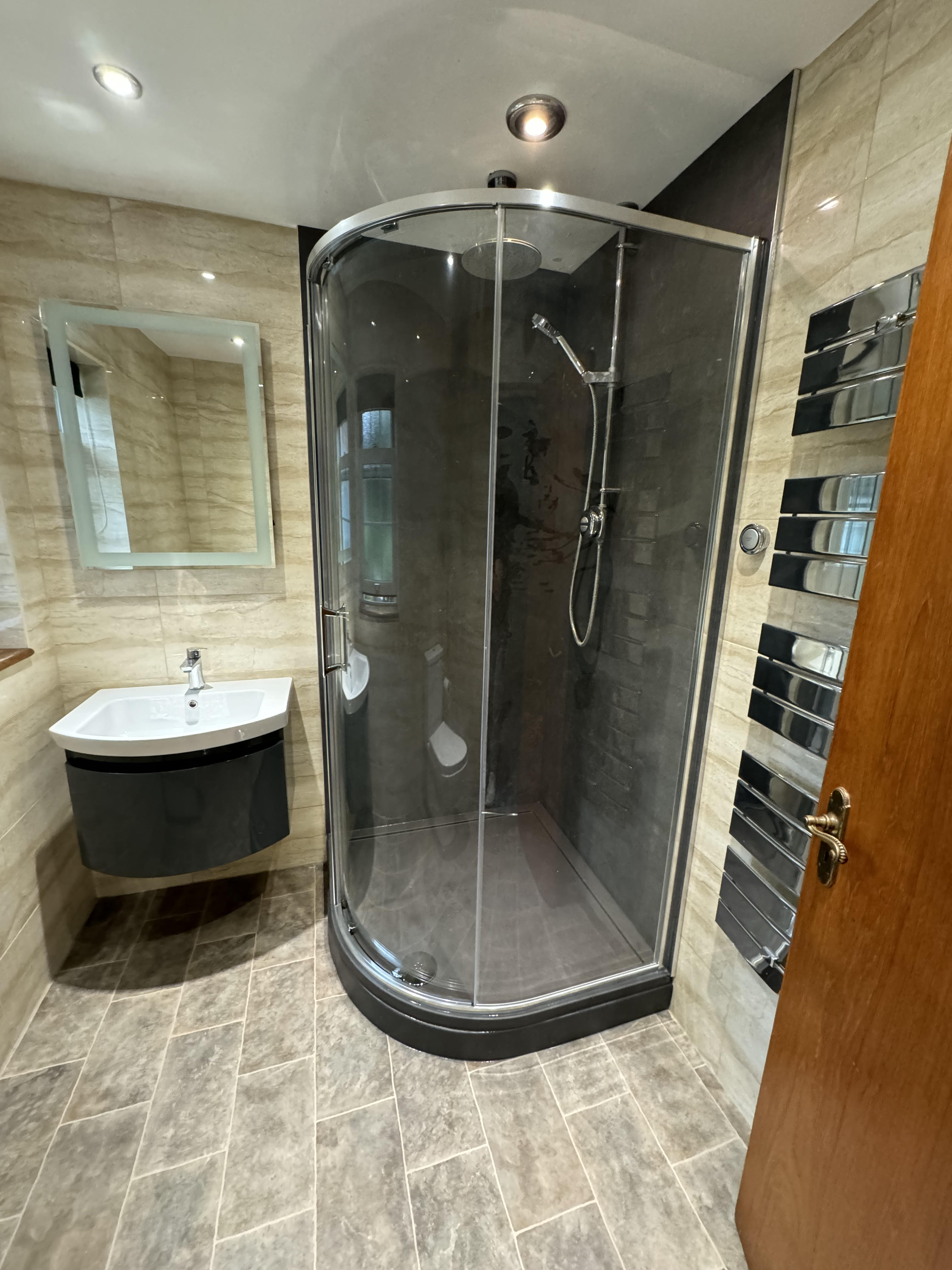
Wall tiles have long been the favourite adornment of bathrooms and shower rooms across the UK. Whilst traditional tiled walls allow a certain amount of creativity (and of course waterproofing) in bathroom design, more and more homeowners are installing shower or shower panels as a low-maintenance, lower-cost alternative. Although panels are a stark contrast to tiles, they can complement a range of bathroom designs in both modern and historic properties. They also address some of the major drawbacks of traditional tiled walls in terms of maintenance, cost and hygiene.
When our shower tray cracked, we were obviously faced with replacing the shower tray. More than that, however, we had to reconsider the shower walls themselves: removing the original tray and shower screen put the wall tiles at risk of cracking. With only a few spare tiles sitting in the garage, we were forced to consider installing panels as part of the repair job. The following outline of the pros and cons of shower panels as opposed to wall tiles proved useful during the project.
Pros
Cost
Of course, the total cost of your project will depend on the panel material and size of area covered. As with tiles, the cost of the panels themselves can vary widely depending on the material, too. However, in most cases the cost of mid-range shower panels is less than tiling the same area. Add to that the fact than shower panels can be installed atop existing tiles (so there is no need to remove the tiles for installation, unless the surface is uneven), and the cost of labour is usually far less in most cases, too.
Range of materials and finishes
Despite not having the legacy of wall tiles, there are a range of materials and styles to choose from when it comes to shower panels. This not only accommodates a wider range of budgets, it also affords a certain amount of creativity when it comes to designing or reimagining the space. At the lower end, PVC panels are the cheapest option (exact prices depend on thickness and size); these often come with the shortest lifespan of around 10-20 years. However, it should be noted that PVC panels are more prone to cracking and splitting. Plywood panels are a good middle ground in terms of cost and durability; with a lifespan of around 20-30 years, these consist of a solid plywood core and a top laminate layer. More expensive panels, such as those made of porcelain, will push the cost up further. Panels (of all materials) are also available in a range of thicknesses.
Installation
Opting to install panels means the area can be sealed and ready to use in just 24 hours. On the other hand, tiling or retiling typically requires at least three days before the area is watertight and the grout dry. Some panels are available to buy as DIY kits for those proficient with this kind of project.
Hygiene and Maintenance
With no grout lines, shower panels will not collect mould and mildew like a tiled wall will. Scrubbing grout on a weekly basis has to be one of the most labour-intensive and soul-destroying household cleaning tasks, but it is essential with tiles and grout. The impact of damp and mould on health is well researched, and in extreme cases it is known to correlate to respiratory diseases and conditions, asthma and allergies (Clark et al., 2023).
Removing grout-scrubbing from your cleaning regime is a benefit indeed; whilst you will still need to clean shower panels (and use a silicone shower scraper to remove surface moisture after use), far less effort is involved and, crucially, mould or bacteria won’t be able to accumulate on a panel as easily as they do on grout. This not only saves on cleaning time and labour,it also makes it much easier to maintain a good level of hygiene and cleanliness compared to a tiled wall.
Style
Shower panels are available in a wide range of colours, designs, patterns and finishes that can complement most design schemes. There are even panels that replicate the look of a tiled wall. From modern to period properties, there is a panel that can suit the aesthetic of the room as a whole and provide a watertight but visually appealing space. Textured, matte finishes can provide a rustic effect, whilst gloss finishes provide a sleeker visual.
Cons
Durability
Although plywood panels have a lifespan of around 20-30 years, tiled walls are expected to last as long as the bathroom itself. Whilst cracks or chips in a tiled surface can be repaired by replacing an individual tile, of course any damage to a panel ideally requires replacing the entire panel. What is more, shower panels can be easily damaged by knocks and bumps; these can lead to cracks and water ingress, and again replacing an entire panel. If you are covering a small shower enclosure that might be frequently knocked by elbows or knees, or a bathroom wall or shower enclosure that will be used by small children and likely knocked by exuberant play with bath toys (for example), it might be worth sticking to tiles for the meantime.
Although installation costs can be kept down by installing panels over the existing tiles, removing the tiles first could increase the life span of the panels. This of course greatly increases the cost of the project (and the time it takes) but, depending on the age of the tiles at the point of installation, it might well be worth it: as tiles age, the adhesive may fail and the grout could well blow, creating an uneven surface behind your panels that would cause them to fail in turn. You need to make a judgement about whether or not to remove the tiles before installing panels and take advice from the installer. At the very least, any damaged or loose tiles should be removed, and the surface evened out with plaster, before installation. Any remaining tiles need to be completely clean and dry before panels are installed on top.
Environmental impact
Limited lifespan and durability means shower panels are not considered as environmentally friendly compared to tiles made of natural materials (such as ceramic). However, it should be noted that many plywood panels are made from FSC certified wood, and as a result can be considered a sustainable alternative at least. Moreover, many PVC and plywood panels are fully recyclable.
Limited creativity
In terms of creativity and interior design, it is hard to beat tiles. The Ancient Egyptians are thought to have pioneered the decorative and practical use of tiles, around 4000BC, and it’s fair to say their popularity hasn’t waned greatly since. Tiles are available in a much wider variety of styles, shapes, sizes and colours compared to panels. Tiles can also be mixed and match to impressive creative effect. Panels definitely lack this element of creativity, and a room featuring shower panels may need to rely on the other areas for flair.
Fading
Shower panels will fade slightly over time, particularly those made from PVC. Exposure to sunlight and use of harsh cleaning chemicals will exacerbate this. However, the same can be said for tiles. Although tiles are longer-lasting, they will also typically fade due to prolonged exposure to sunlight, prolonged use of harsh cleaning chemicals or poor sealing. As panels are easier to keep clean, arguably prolonged exposure to cleaning chemicals will be less of an issue in panelled bathrooms or showers.
Conclusion
Although tiles offer flair and are certainly traditional, there are considerable drawbacks in terms of maintenance, hygiene and cost. Shower, bathroom or ‘wet wall’ panels are available in a variety of styles and materials, offering a modern alternative to avoid these drawbacks. Panels are also generally less expensive than tiling the same area, quicker to install, and are more hygienic and easier to maintain. The main drawbacks of panels are their limited lifespan (depending on material) and the restrictions they place on the design of the room as a whole: covering a relatively large area in one pattern, design or colour is limiting design-wise compared to tiles, which are available in an almost infinite variety. Nevertheless, shower and shower panels offer a cost-effective alternative when it comes to redoing your bathroom or shower room and offer much needed relief from scrubbing grout!
If you are considering buying or selling a home, you may find some of these services useful:

Mortgage Brokers
I need help getting a mortgage

Energy Performance Certificate
Energy Performance Certificates

Building Surveys
I want a local surveyor to do a Building Survey for me

Home Survey and valuation
I want a local surveyor to do a homebuyer survey and valuation for me
Structural Inspections
Find an expert to carry out a structural inspection
Structural Calculations
Find an expert to provide Structural Design Calculations

Invasive weeds report
If you are concerned that you may have Japanese Knotweed, or other nuisance plants.

Electrical Reports
Find an Electrician to produce an Electrical report (sometimes known as an Electrical Installation Condition Report - or EICR) for a property.