You are here: Tips for creating an outdoor living space
How to create a living room in your garden
Today we want more from our gardens. They’re becoming outdoor living rooms – places to relax and entertain, as well as grow beautiful plants. Warmer weather means we’ll soon be spending more time outdoors, so this year create an open-air chill out zone that not only provides extra living space but also adds value to your home.
Choosing the location
Take advantage of any views your home has to offer – arrange a small sitting area to enjoy a morning cup of coffee or a G&T at sunset. Where are the sunniest spots in your garden? Do you want your outside living room mostly sunny or shady? You’ll also want to think about what time of day it gets sunshine.
The ideal location will be sheltered from the wind and near enough the house to avoid long treks back and forth in search of refreshments or the loo. Ideally, it will be a private spot, too as it’s difficult to completely relax if you’re being overlooked. Trellis fencing with climbers, hedges and shade sails can help create privacy. When you have chosen your location, measure the space and buy furniture that fits the area.
Garden furniture
If you are lucky enough to have outdoor space for two seating areas, you could use one for dining and one for lounging. Folding bistro tables and chairs are affordable and can squeeze into even the smallest of spaces but no outside area is complete without a comfy couch for lounging. L-shaped sofa and table sets work well in garden corners and you don’t need to spend a fortune. Build your own DIY outdoor sofa set with old wooden pallets or reclaimed timber. There are YouTube video tutorials and B&Q has a step-by-step guide on its website. Just add a coat of exterior paint to protect the timber and some waterproof seat cushions for a stylish finish.
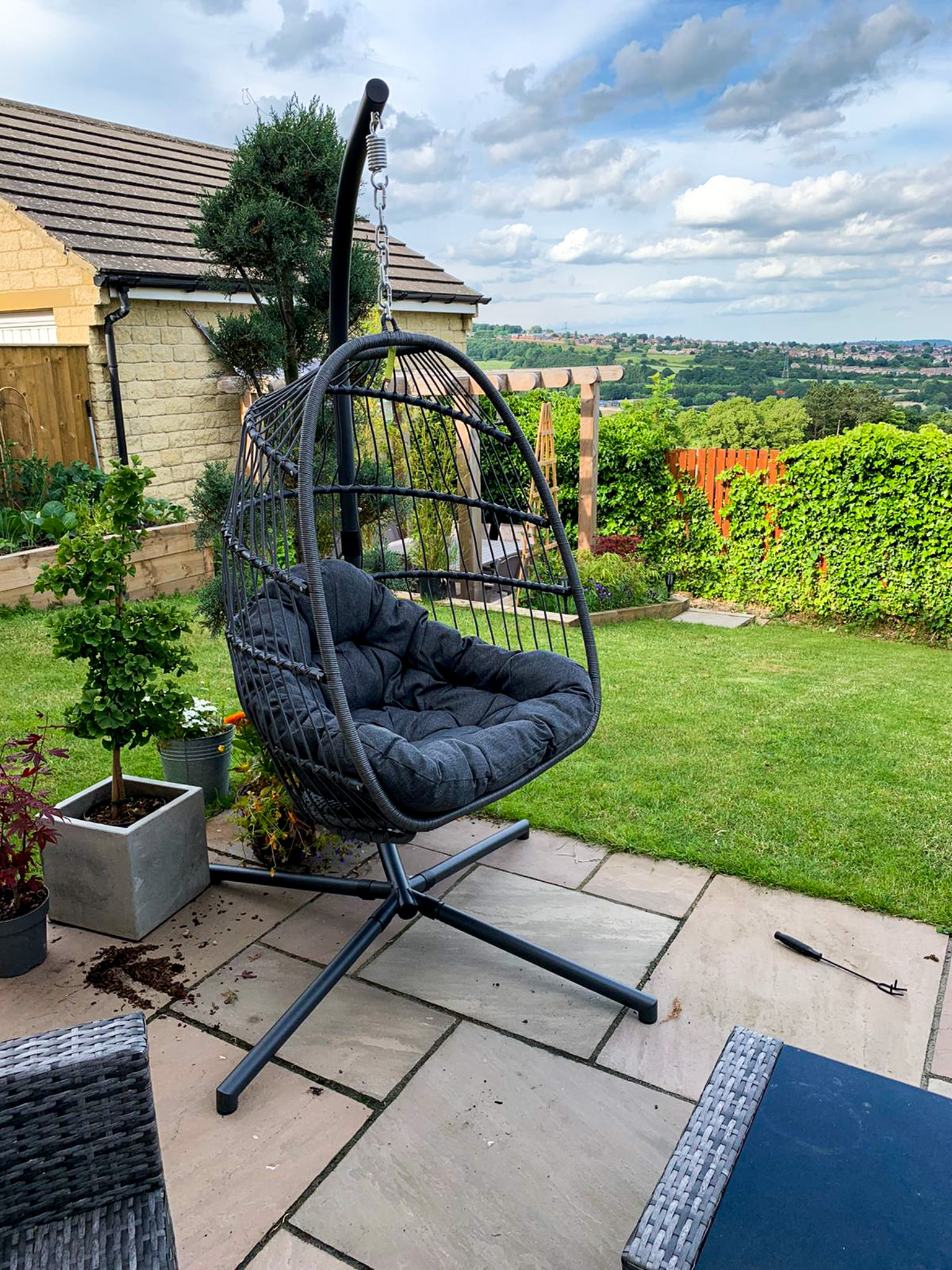
Other popular garden seating ideas include wooden benches, hanging egg chairs and water-resistant bean bugs. Cushioning to provide padded comfort is a must. Choose furniture that is durable, easy to clean and weather resistant.
Landscaping materials
An attractive, circular pattern of laid bricks creates an entirely practical, low-maintenance surface, ideal for sitting in the sun – or alfresco dining. A stylish way to make a garden feel like an extension of the home is to use the same materials both inside and out. This might mean picking a similar flooring material to create one cohesive space. A limestone tiled floor in a kitchen-diner could be extended outside to a patio or terraced seating area, especially if they are divided by bi-fold or sliding glazed doors that can be pulled back to create one free flowing space.
Hardworking porcelain tiles can work well for bridging inside and outside spaces. If using tiles, make sure they’ve got a rough surface for a slip-resistant grip and they’re frost proof. Other materials that work well both inside and out include slate and concrete. Flagstones are porous, so will require a sealant to protect the stone from the elements and other damage in your kitchen or living space.
Outdoor entertaining
There are few things better than dining alfresco whether it’s a light lunch in the summer sunshine or nestled in blankets for an evening meal under the stars. If you’re handy with a hammer, you might build your own small bar area for drinks and snacks. Alternatively, invest in a rattan or timber garden Tiki bar set, so it will always be tropical in your garden, no matter the weather. If you have the cash to splash, buy an outdoor fridge to keep the beers chilled or, a more wallet friendly option, simply fill a large cool box with ice.
Outdoor cooking can add a whole new dimension to your outdoor space. A permanent outside kitchen with plumbing, drainage and electricity can cost thousands but you can create a similar vibe for much less with a small portable barbecue, outdoor pizza oven or built-in grill tucked into the corner of your patio.
Shading
It’s wise to consider shading for outdoor seating as there’s nothing fun about getting sunburnt. There are lots of simple solutions, such as garden umbrellas, shade sails, awnings and pop-up gazebos. But if you’re really serious about outdoor living, you might want to invest in a more permanent structure. A metal or wooden pergola covered in climbing plants, such as honeysuckle, grapevines, clematis, rambling roses and wisteria, can add romantic charm. Pergolas make great focal points, too. For extra shade on scorching hot days, consider adding a canvas cover on top if required.
Garden lighting
Why go indoors when you can party outdoors after dark? Adding lighting to your outdoor space is a great way to extend alfresco gatherings. Stringing fairy lights along a trellis or around a tree can add twinkle all year round. It can also look great from indoors when viewed through the windows. Pillar lights and garden lanterns can highlight hard landscaping, such as a path, and create a cosy ambience. Strip LED lighting set into decks or under step rises means you can see where you are walking. Outdoor wall lights can wash light up and down walls for task lighting for cooking or pouring drinks.
For extra visual effect, highlight an ornamental tree or sculpture from the ground level up with spotlights. Structures, such as archways and pergolas, can also look fabulous lit up a night. Be aware light pollution can be an issue. There’s nothing more annoying for neighbours than a bright security light left on all night. Keep garden lighting subtle and understated. Avoid a floodlit football pitch effect.
Solar powered LED lights are great to use in spaces where there is no outside power source available and will save on energy costs.
Technology
Incorporating technology into your outdoor living space can enhance the overall experience for some. Outdoor speakers are a popular addition as they allow you to listen to music while outside partying. You could also install a Wi-Fi network to stay better connected while enjoying the garden. Another popular technology addition is smart lighting that can be controlled with a smartphone app. This is a great way for setting the mood for outdoor gatherings, allowing you to control the brightness and colour of your outdoor lights remotely. Alternatively, you may prefer to stay tech-free to create a relaxing, tranquil space.
Planting
Whether you have a small balcony or a large patio, planting in pots adds another dimension to your outside living room, brightening dull spots, softening brick walls and providing instant yet easily changeable character. Vegetables and fruit like peppers, cherry tomatoes and strawberries in pretty pots are ornamental as well as edible while scarlet flowering runner beans and espaliered fruit trees can make an attractive trellis or pergola. Shrub and landscape roses work well in tubs. Roses need full sun, however. Hostas work well in containers and make beautiful architectural plants. Remember to include fragrant plants near seating areas, such as lavender, honeysuckle, jasmine and night-scented stocks.
Finally, don’t forget to decorate. Add plenty of cushions, outdoor rugs, wind chimes, candles and other accessories to add a cosy and inviting touch to your space. Even a cheeky garden gnome can add personality. Anything goes – as long as it’s weather-proof. Regardless of how big or small your outside space is, get the design right and it will be a wonderful place to invite family and friends over and enjoy relaxing summer days and evenings.
If you are making improvements to your home, you may find some of these services useful:

Garden Design
If you are considering improving your garden

Architectural Design Services
Find local Architectural Design experts

Ecological Surveys
A survey of the environment for wildlife that may affect any building or development

Invasive weeds report
If you are concerned that you may have Japanese Knotweed, or other nuisance plants.

Arboricultural Surveys
To assess any impact of trees growing near to properties
Structural Inspections
Find an expert to carry out a structural inspection

Structural Calculations
Find an expert to provide Structural Design Calculations