You are here: Nett Rewards of Eco-Improvement
There is no doubt that achieving reductions in our carbon footprint is good for the environment, some might say imperative for our future on this planet. The evidence of global warming is a phenomena which most of us can see and accept as a reality which we must react to. We are told that much of the damage to the environment is man made, as a result of greenhouse gasses emitted by our burning of fossil fuels to support our post industrial revolution lifestyles.
As this lifestyle has evolved and our reliance on fossil fuels has become imbedded in our culture, it has done so without the knowledge of greenhouse gases, their effect on global warming and the potential damage to our environment. It is only in the last few years that climate change has become a headline issue with governments and individuals and this has resulted in the current push to decrease our carbon emissions. We are being encouraged to switch from petrol and diesel cars, while the fitting of new gas fired boilers is to be banned, although there is still some dubiety over the timescale for that. Is it 2025 or 2035?
There are alternatives that have become the accepted replacements to allow us to lower our emissions of carbon dioxide, methane and nitrous oxide, which are the three main gases causing concern. Heat pumps are being mooted as the future for heating our homes while electric vehicles (EVs) are now appearing in increasing numbers on our roads. The problem is that both of these require a substantial financial commitment up front.
The average cost of a new gas boiler installation or replacement will probably be somewhere in the region of £1,500 - £5,000, including installation. By comparison, an air source heat pump will be likely to cost upward of £13,000 - £15,000. This can at present be offset by a government Boiler Upgrade Scheme grant of £7,000 in England and Wales.
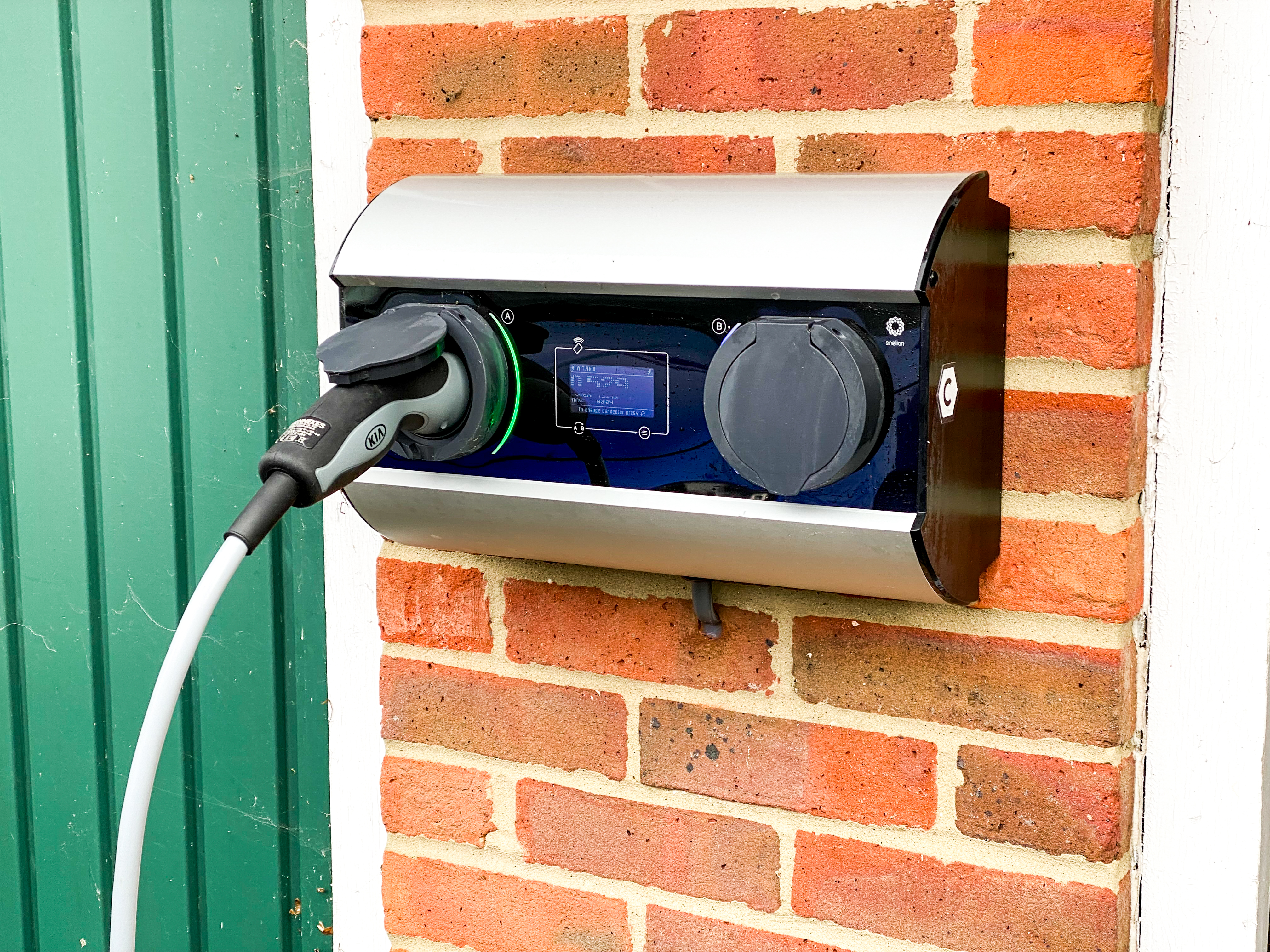
In 2035, sales of new petrol or diesel cars will be banned under present legislation, with electric vehicles taking over as our main means of domestic transport. Comparing the purchase cost of a petrol engine car to that of an electric vehicle will show that a small to mid-range electric car will cost around £10,000 more to drive out of the showroom than its fossil fuelled counterpart. An electric vehicle will then need a further investment of around £1,000 for the installation of a home charge point.
The well-used saying states that there is no gain without pain and that is very much the case with going green on the domestic front. Having outlined the somewhat painful high initial cost of being environmentally friendly we also need to look at the financial benefits of either an electric car or installing a heat pump.
Firstly, owning an electric vehicle (EV) means that you are able to sign up to an EV energy tariff which allows you to charge your electric car for a reduced unit rate. This could allow you to charge your EV at a lower tariff rate at specified times, normally during overnight hours. The current energy price cap allows energy providers to charge up to 28.17p per kWh of electricity. An EV tariff can be from as little as 7.5p per kW/h during off-peak times – that’s a potential saving of up to 70%. To apply for an EV tariff you must be able to demonstrate that you have an electric vehicle and a home charge point. Although EV tariffs are targeted at charging EVs, the cheaper unit rates will normally apply to all domestic electricity usage during these targeted off-peak hours. This means you can save money on household activities, like running a washing machine or dishwasher and any appliance which runs overnight will also benefit from the lower tariff.
The cost or running an EV depends on the energy costs when charging and the rate in which the vehicle uses up the battery power. There are a range of costs and prices quoted around EV running costs versus petrol or diesel cars but typical figures show a substantial saving per mile for the EV, particularly if it is regularly charged on a home charger with an EV tariff in place. The converse is also true, EVs charged regularly at public charge points will show much less difference in running costs.
An EV is not at present liable for road tax, although that may change in the future. It is also worth noting that an electric car only requires to be serviced once every 2 years.
Air source heat pumps are a different proposition as they can be just as expensive to run, or even more than a conventional gas boiler. Using a heat pump will drastically cut your gas bills but will increase your electricity usage and therefore your electricity bills. As electricity is a more expensive domestic fuel than gas you may find that in the colder winter months a heat pump may be more expensive to run despite being more efficient. It is also worth noting that gas prices are more susceptible to volatile political situations than electricity as much of our gas is imported. As the UK generates more of its electricity from renewable sources such as wind and solar, gas fired power stations and will be required less and less. Many of the major electricity suppliers offering EV tariffs are now promising that all of their energy on these deals is from renewable sources.
The energy evolution which will see us driving electric vehicles and heating our homes with heat pumps is still in its first generation. Growing use of EVs will help to bring the price down as manufacturing ramps up, battery technology will improve and public charging networks are already improving. On the down side, we should not expect zero road tax to be maintained as this would eventually cost the treasury £millions every year.
As the use of renewable energy sources increases, more new homes will be built to incorporate heat pumps in their design and solar panels on their roofs. This will start the second generation where we build the new technologies into our lives and our homes rather than adapting our surrounding to accommodate a new electric lifestyle. That will bring more cost savings and a cleaner, heathier lifestyle.
If you are considering extending or altering your home, you may find some of these services useful:

Electricians
Get contact details for Electricians near to you. View the Feedback from other Customers to help you make an informed choice.
Renewable Energy Solutions
Get advice and estimates for Renewable Energy

Help with Planning Permission
Find Professionals who can help you apply

Energy Efficiency
Get advice about the energy efficiency of your property

Architectural Design Services
Find local Architectural Design experts

Find an Interior Designer
Find details of local Interior Designers

Builders
Find local help with a building project

Structural Inspections
Find an expert to carry out a structural inspection

Structural Calculations
Find an expert to provide Structural Design Calculations
Building Surveys
I want a local surveyor to do a Building Survey for me