You are here: Building a Small Water Feature
If the sciences are accurate and global warming does give us longer, warmer, drier weather during our summer months, we may find ourselves spending more of our leisure time outside. Much of that time may well be spent in our gardens, relaxing, and what is more relaxing than the background sound of running water.
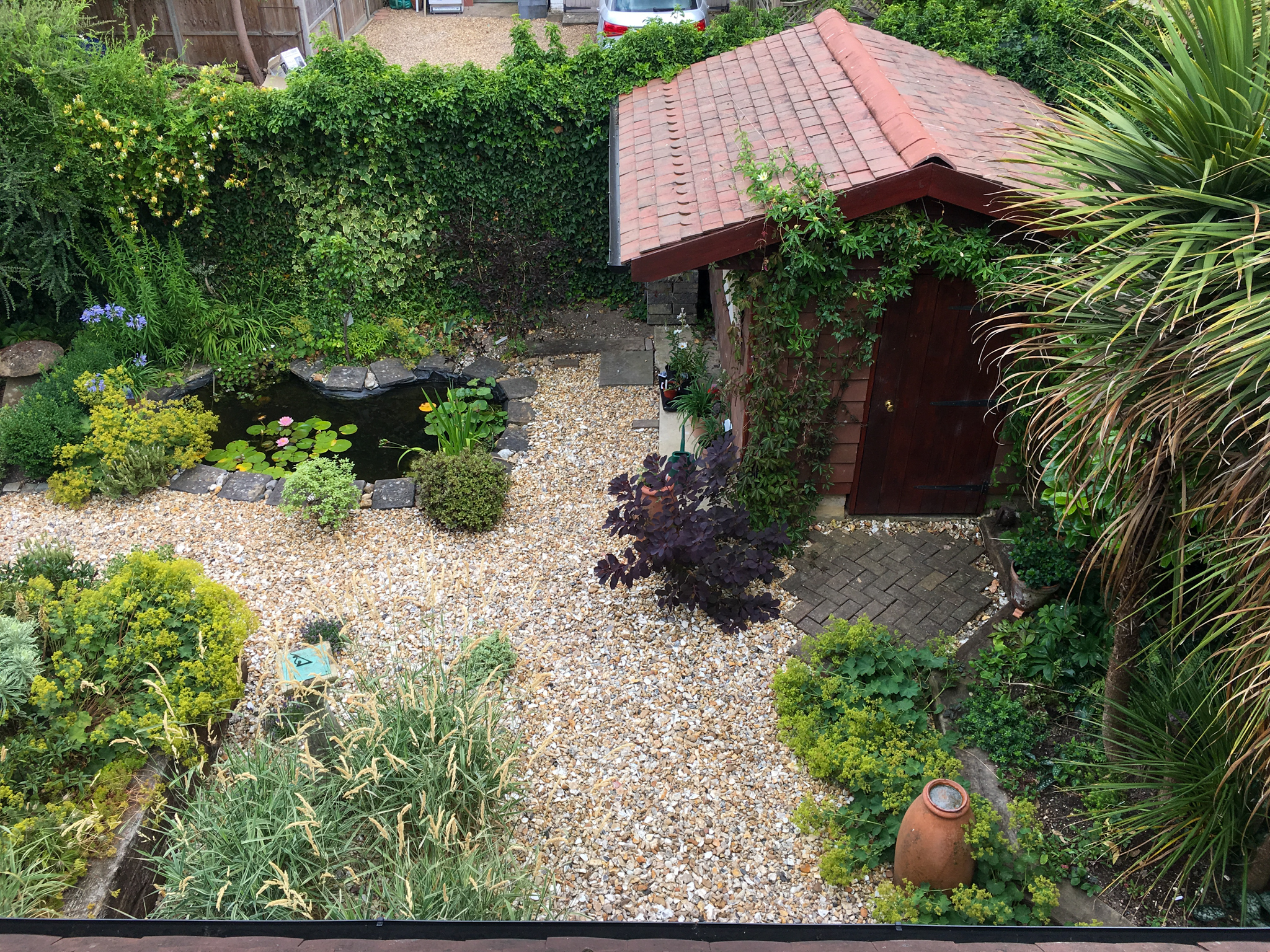
Unless you are lucky enough to have natural running water such as a river, stream or canal running past your garden, you may want to think about installing or building a water feature. Water features can be small and simple or large and ornate, and should be designed to blend in with the rest of the garden. Most of the more elaborate or ornate water features are bought from garden centres or specialist suppliers and come with a built-in reservoir, ready to be put into place and plugged in to a power source if they require mains electric as opposed to solar power.
While this may be a good solution for some, others get a sense of satisfaction and achievement from building a water feature from scratch and will spend many happy hours enjoying the sight and sound of nearby running water. A homemade water feature need not be complicated of difficult to build and would not require any specialist knowledge or tools.
The first step is to decide which area of the garden you want to put your water feature in. You should bear in mind that to get the most benefit from it you and others will want to be able to both hear and see the running water. It will after all be a feature of the garden and it may be difficult to move it around once sited. The siting of the feature should also partially dictate its size and style as it needs to fit in with its surroundings, giving it that “always been there” appearance.
There are various styles that you can adopt for your water feature but all of these require three basic elements water, power and a pump. The water means that you need a store or reservoir to draw water from and a pump to circulate the water and low voltage electricity to drive the pump via a transformer. Remember though that water and electricity are not best friends and any joints or connections should be kept dry and have an IP65 rating and a Residual Current Device (RCD) fitted at the fuse box. This is a device which is an electrical safety component designed to prevent electric shocks and reduce the risk of electrical fires.
Choose a liner for your reservoir and dig out a hole to sink it in to the ground. Use a flexible or preformed pond liner or, if you prefer, a semi rigid plastic container such as a large tub or gardening container, any of these would fit the bill, with the gardening container being the least expensive option. If using the semi rigid option, leave the rim of the container a little proud of the surface to stop any soil or debris falling into the reservoir as you work around the area.
Select a pump which will easily circulate the water. There are a number of options of pump size depending on how much water you want to move, so select one which may be a size up from the one you would actually need so that you are not overworking the pump. Having selected a pump, connect one end of a flexible plastic tube to it then cut enough tubing to easily reach to your fountain head. Use a heavy gauge metal grill, cut to size to cover the reservoir, pass the other end of the tubing through the grill and connect it to the fountain head, allowing a generous length of tubing so that you can manoeuvre your fountain head to get access to the water for cleaning or maintenance of the pump if necessary.
It is best to fill the reservoir with water and adjust the flow on the pump to give the require water height at the fountain head before completing the top section or cover. If using tap water, as opposed to collected rain water, to fill the reservoir remember to add a dechlorinator or let it stand for 24-48 hours before introducing fish or plants. The visible part of the feature can vary to suit personal tastes and the surroundings of the installation. It can typically be a collar of larger stones surrounding a layer of smaller cobbles to cover the metal grill. If you want to use smaller pebbles as a bed for the fountain head, you should cover the metal grill with a finer mesh which would hold the gravel without allowing it to wash into the reservoir.
The flow from the pump can be adjusted from a valve on the pump, the water should spray or bubble out of the fountain head onto the cobbles or pebbles and flow back into the reservoir without spillage otherwise you will be constantly topping up your water level. If the flow rate drops during use, it may well be that the filter on the pump inlet is beginning to clog up. You should check and if need be, clean the filter. This requires you to switch off the pump and lift the pump out of the water, remove the outer cage, and take out the foam/sponge. Rinse the sponge thoroughly in water taken from the reservoir, replace and reassemble the pump and replace it in the reservoir. It is important if you have fish in your reservoir not to use tap water as the chlorine in the water will be detrimental to you fish.
Small simple water features need not be high maintenance and for very little investment in time and money can give a soothing background to your time relaxing in your garden.
If you are considering buying or selling a home, you may find some of these services useful:

Mortgage Brokers
I need help getting a mortgage

Energy Performance Certificate
Energy Performance Certificates

Building Surveys
I want a local surveyor to do a Building Survey for me

Home Survey and valuation
I want a local surveyor to do a homebuyer survey and valuation for me

Structural Inspections
Find an expert to carry out a structural inspection
Structural Calculations
Find an expert to provide Structural Design Calculations

Invasive weeds report
If you are concerned that you may have Japanese Knotweed, or other nuisance plants.

Electrical Reports
Find an Electrician to produce an Electrical report (sometimes known as an Electrical Installation Condition Report - or EICR) for a property.